

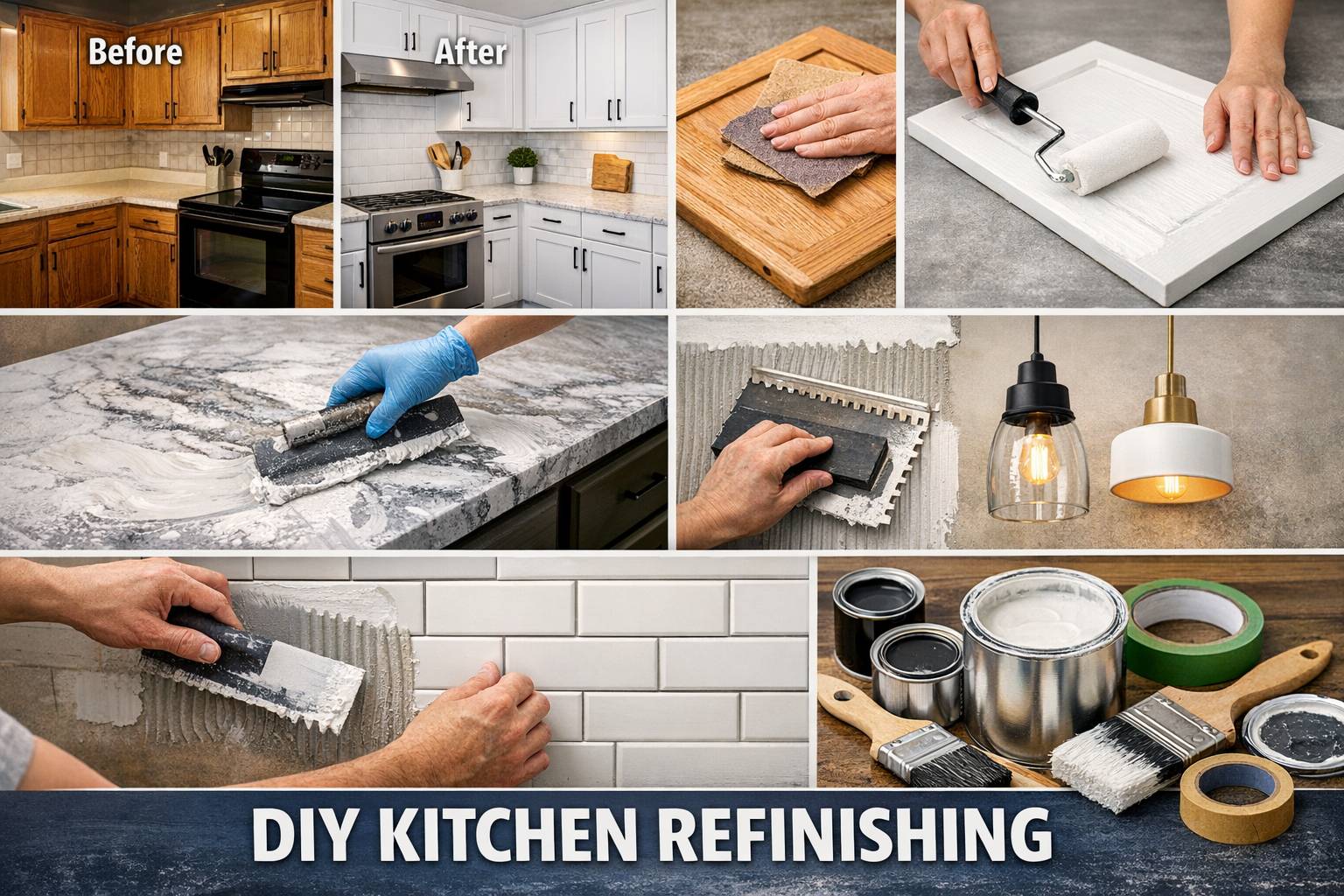
The kitchen drives more value than any other room. It shapes both resale potential and daily experience. However, you do not always need a full remodel. Instead, refinishing delivers impact without heavy spending.
A complete renovation often costs between $30,000 and $75,000. In contrast, DIY refinishing stays far below that range. Homeowners can refinish cabinets for $300 to $1,000. Countertop resurfacing kits often cost $200 to $800.
Additionally, backsplash, hardware, and lighting upgrades usually remain under $1,000. If cabinet boxes remain solid and the layout works, refinishing makes financial sense. Sellers benefit because updated kitchens attract stronger offers. As a result, you protect profit while improving presentation.
Step 1: Refinish Cabinets First
Cabinets dominate the visual space in most kitchens. Therefore, updating them creates the largest transformation. A fresh finish modernizes the entire room quickly. Focus here before tackling other surfaces.
You will need:
- Degreaser such as TSP substitute
- Sandpaper in 120 to 220 grit
- Bonding primer
- Cabinet grade paint in satin or semi gloss
- Foam rollers and angled brush
- Optional paint sprayer
First, remove doors and hardware carefully. Next, clean every surface thoroughly to remove grease. Then sand lightly to improve adhesion. After that, apply primer and two coats of paint.
Finally, reinstall doors with updated hardware. Consider soft close hinges for a premium feel. Small upgrades like this elevate the space instantly.
Step 2: Resurface Countertops
Countertop replacement often strains budgets. Instead, resurfacing kits offer practical alternatives. You can mimic marble or granite finishes convincingly. Epoxy systems create durable and glossy surfaces.
Work slowly and follow instructions closely. Proper preparation ensures long term durability. Moreover, sealing worn laminate refreshes tired surfaces. This step increases perceived value without demolition.
Step 3: Upgrade Hardware and Lighting
Small details often produce large returns. Replace dated pulls with matte black or brushed brass options. Install a modern faucet to refresh the sink area. Add pendant lights over islands for visual focus.
Furthermore, under cabinet LED lighting improves function and mood. These changes usually cost a few hundred dollars. However, they dramatically modernize the room.
Step 4: Refresh the Backsplash and Walls
Peel and stick tiles now offer improved durability and style. They suit budget friendly projects well. If you prefer traditional materials, install classic white subway tile. Buyers respond well to timeless finishes.
Additionally, repaint walls to complement cabinet colors. Fresh paint sharpens the entire presentation. Together, these updates complete the transformation.
Choose Colors Strategically
If resale drives your goal, select neutral tones. Neutral palettes appeal to the broadest audience. Consider these combinations:
- Warm white cabinets
- Light gray walls
- Soft greige tones
- Navy island with white cabinetry
Bold colors express personality but limit buyer appeal. Therefore, choose restraint over experimentation.
Timeline and Return
Most homeowners complete refinishing within two to three weekends. One weekend handles prep and primer. The next covers painting and reassembly. Countertops and hardware require only a few additional days.
From a resale perspective, kitchen presentation strongly shapes buyer perception. Updated finishes improve listing photos immediately. They also reduce objections during showings. A modest $1,500 investment can accelerate sale speed and support stronger pricing.
Avoid Common Errors
Avoid rushing preparation or drying time. Clean surfaces thoroughly before sanding. Use high quality paint for durability. Finally, resist over customizing finishes.
Refinishing focuses on smart upgrades, not shortcuts. With planning and patience, you can transform your kitchen efficiently. Strategic improvements protect budget while elevating value.