

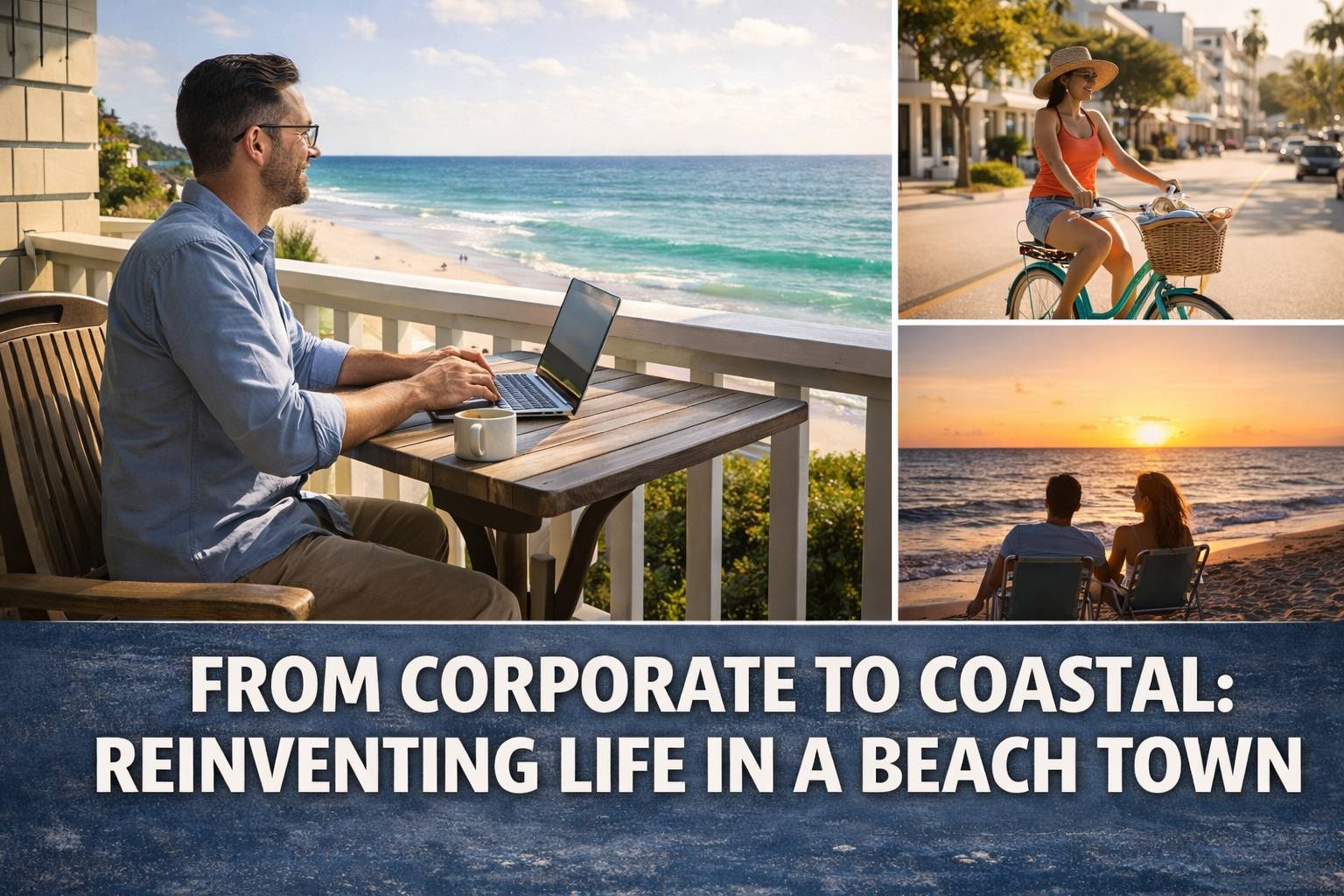
At some point, many professionals pause and question their routine. They sit in glass offices and stare at glowing screens. Meetings stack up and calendars stay packed. Yet something feels misaligned beneath the surface.
That realization rarely sparks instant change. Instead, it builds during vacations or remote work experiments. A week near the ocean plants a disruptive idea. Soon, the question becomes harder to ignore.
What if the beach replaced the boardroom? What if ocean air replaced recycled office air? Coastal towns offer rhythm instead of urgency. Tides rise and fall without calendar invites.
Trading Commutes for Coastlines
Corporate mornings often begin with traffic and inbox alerts. Coastal mornings feel intentionally slower. Many residents start their days with:
- Sunrise walks along the shoreline
- Coffee outdoors with ocean air
- Bike rides instead of highway commutes
- Conversations with familiar neighbors
As routines shift, priorities adjust naturally. Deadlines still matter, but urgency softens. The ocean reframes problems quickly. Perspective expands with every horizon view.
Redefining Success
Corporate culture often measures achievement through visible milestones. Professionals track titles, promotions, bonuses, and square footage. Coastal living introduces different benchmarks. People evaluate quality of life more directly.
New measures of success often include:
- Time spent outdoors
- Lower daily stress
- Stronger community ties
- Meaningful experiences over possessions
Many who relocate discover they need less to feel satisfied. Smaller homes reduce maintenance and expenses. Outdoor activities replace costly entertainment. Consequently, spending patterns shift toward intention.
This shift does not erase ambition. Instead, it reshapes how ambition expresses itself. People align work with lifestyle rather than sacrificing lifestyle for work. That recalibration changes long term goals.
The Rise of Flexible Careers
Few coastal movers stop working entirely. Instead, they redesign income streams. Remote consulting remains common among former executives. Others launch small businesses tied to local demand.
Common transitions include:
- Freelance creative services
- Boutique retail or cafés
- Hospitality and short term rentals
- Real estate in coastal markets
Productivity remains strong, but alignment improves. Professionals build schedules around sunrise and family dinners. Work supports life rather than dominating it.
Community and Daily Life
Coastal communities often feel more accessible and social. Casual dress codes remove status signals. Public spaces encourage lingering conversations. Shared appreciation for nature builds connection.
Neighbors greet one another regularly. Outdoor gatherings replace formal networking events. Even in busier beach cities, residents share a common intention. They chose lifestyle first.
Financial Reality
Moving coastal does not always reduce costs. Some waterfront markets command premium pricing. However, smaller or lesser known towns remain competitive with major urban centers. Housing may shrink, but quality of life expands.
Many find that lifestyle expenses rebalance naturally. Commuting costs decrease significantly. Stress related spending declines over time. Remote work increases geographic flexibility further.
The Emotional Shift
Those who relocate often describe physical changes. They breathe more deeply and sleep more consistently. They move at a steadier pace. Daily tension decreases without deliberate effort.
Challenges still exist, but perspective transforms. Ocean horizons diminish yesterday’s office drama. Long term clarity replaces short term urgency. Life feels intentionally designed.
Intentional Change
The transition from corporate to coastal rarely represents escape. Instead, it signals deliberate redesign. People move toward presence and community. They seek fulfillment rather than status alone.
Some stay temporarily, others permanently. Yet most describe the shift as transformative. Coastal living becomes more than relocation. It becomes recalibration.