

Home Appliance Insurance: Is It Worth It?
Many homeowners face a choice: pay for appliance insurance or handle repairs themselves. The concept seems simple. Pay a monthly fee, and broken appliances get fixed or replaced. But the decision depends on your home, appliances, budget, and risk tolerance.
What Appliance Insurance Covers
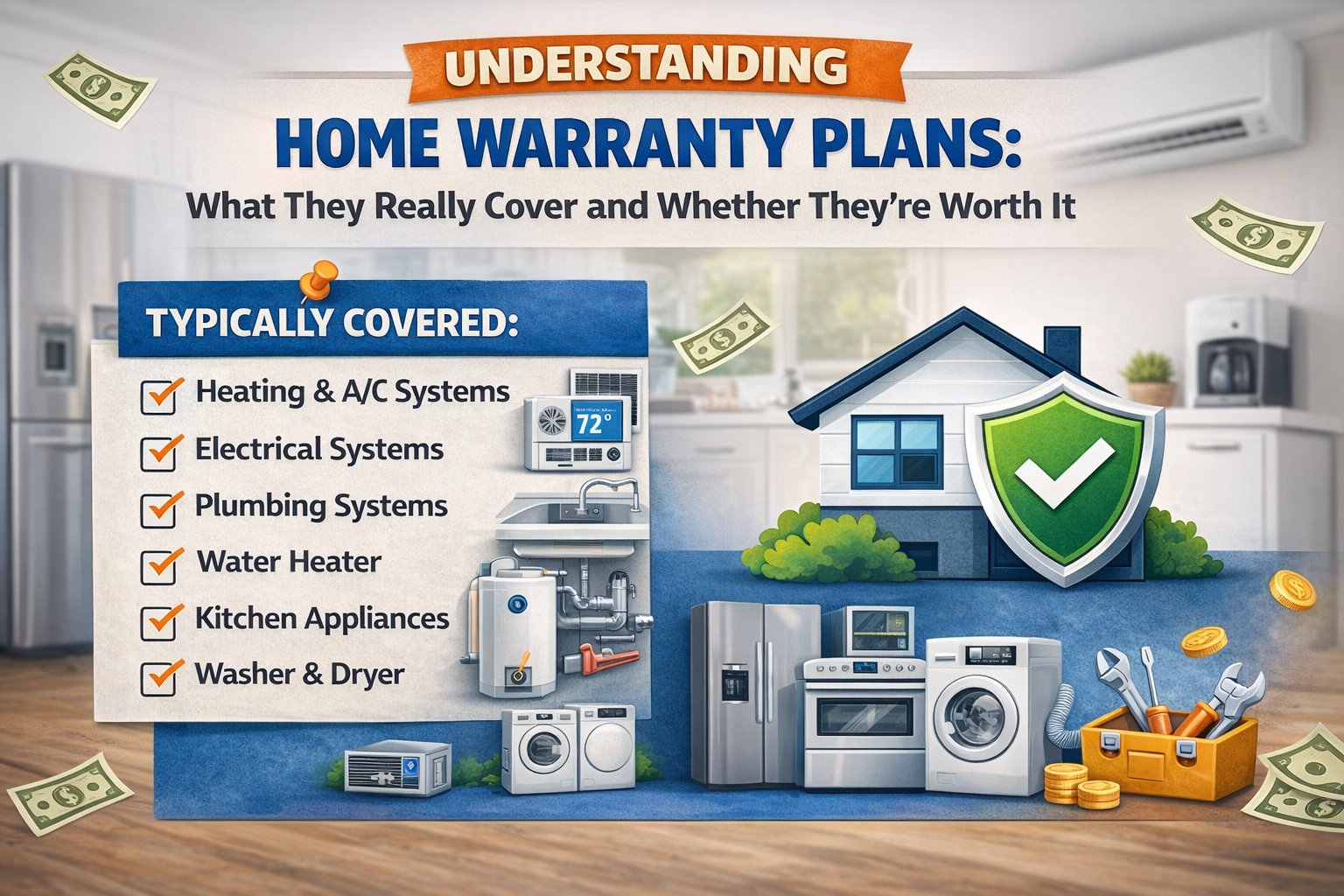
Home appliance insurance, often part of a home warranty, protects against normal wear and tear. Typical coverage includes:
- Refrigerator, oven, and range
- Dishwasher, washer, and dryer
- Water heater and HVAC systems
- Electrical and plumbing systems
Unlike homeowners insurance, it doesn’t cover fire, storms, or theft. It only addresses mechanical failure from everyday use.
How It Works
Most plans operate with a monthly premium, often $40–$80.
- Submit a service request when an appliance breaks.
- Pay a service fee, usually $75–$150 per visit.
- The company sends a contracted technician.
- Repairs are covered up to policy limits; replacement rules vary.
When Appliance Insurance Makes Sense
Consider a plan if:
- Appliances are older: Systems near end-of-life risk expensive repairs.
- You just bought a home: Warranties protect against unknown issues during the first year.
- You prefer predictable expenses: Monthly payments prevent surprise high-cost bills.
For example:
- Water heater replacement: $1,500–$2,500
- New HVAC system: $7,000–$12,000
When It May Not Be Worth It
Skip insurance if:
- Appliances are new: Manufacturer warranties already provide coverage.
- You maintain a strong emergency fund: Savings can cover most repairs.
- You expect full replacement value: Policies often replace with “comparable” items, not brand-new models.
Common Complaints
Potential downsides include:
- Delays in scheduling repairs
- Limited contractor selection
- Claim denials for improper maintenance
- Partial coverage requiring out-of-pocket costs
Research providers carefully before committing.
Cost vs. Probability
Appliance insurance protects against rare, high-cost failures.
- Example: $60 per month ($720/year) + $100 service fee
- Over five years, premiums total $3,600
- If only one major repair occurs, the policy may save money, depending on limits
Risk Tolerance Matters
Some homeowners prefer certainty and protection against worst-case scenarios. Others self-insure and manage repairs independently. Neither approach is wrong.
Questions to Ask Before Buying
- What are coverage limits per appliance?
- Are pre-existing conditions excluded?
- Are maintenance records required?
- Can you choose your own contractor?
- What are service fees and denial reasons?
Special Considerations for Sellers
Sellers sometimes buy warranties to:
- Increase buyer confidence
- Reduce post-closing disputes
- Add marketing appeal without lowering price
Final Thought
Appliance insurance is not inherently good or bad. It shifts when and how you pay for repairs.
- Consider your appliances’ age
- Assess your financial cushion
- Decide based on risk tolerance and lifestyle
Ultimately, whether you pay a warranty company or build your own repair fund, maintenance costs are inevitable. Smart homeowners plan ahead.