

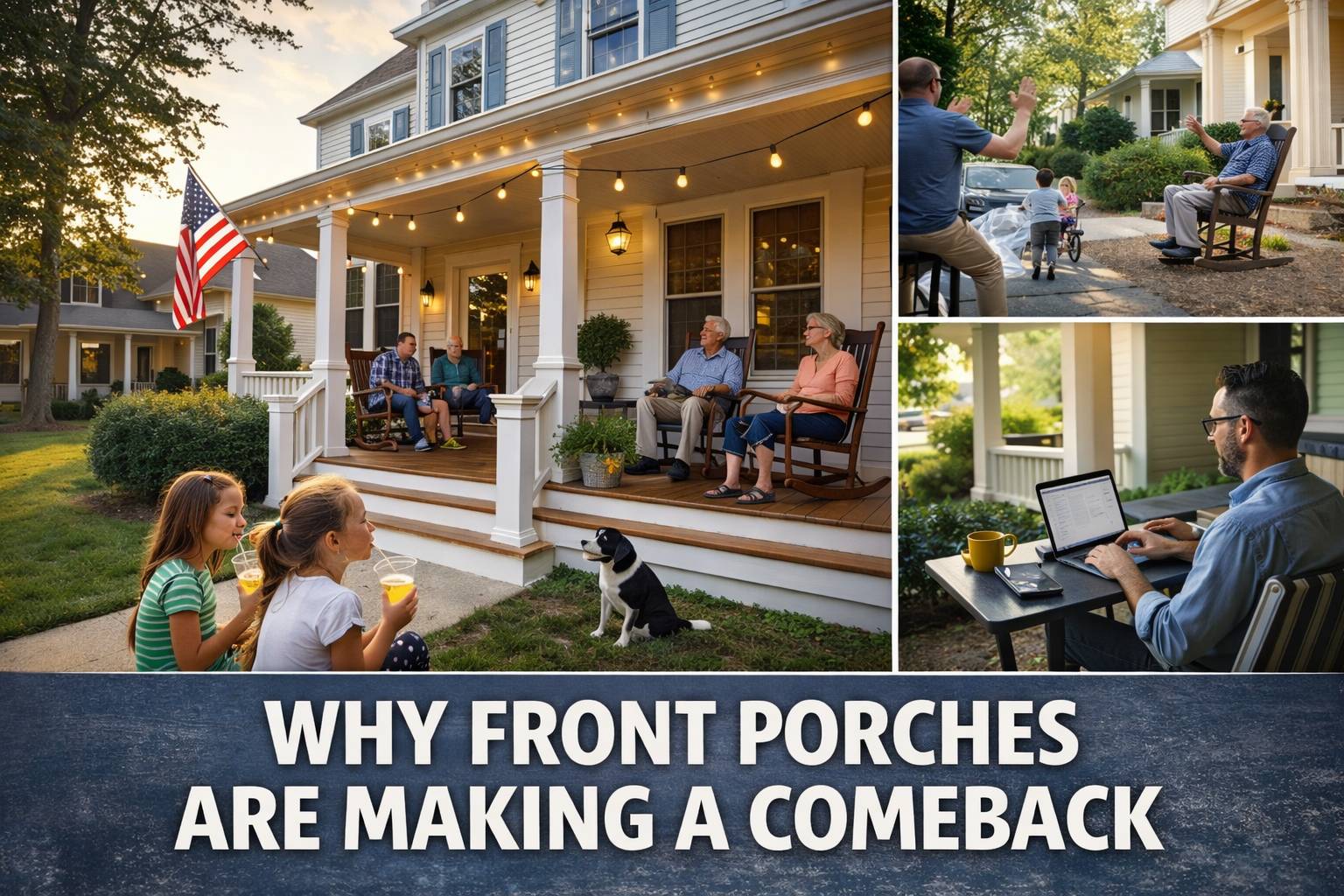
There was a time when the front porch shaped daily life in America. Neighbors waved across railings and shared quick conversations. Children cooled off with lemonade after long summer afternoons. Grandparents rocked gently while telling stories in the evening light.
Over time, homeowners shifted focus inward. Builders emphasized back patios, garages, and enclosed living rooms. Families entered through side doors and retreated quickly inside. As a result, neighborhoods slowly lost visible interaction.
However, something has changed in recent years. Many homeowners now crave connection over isolation. They want presence instead of constant privacy. Consequently, the front porch has returned to modern design.
The Return of Community
Today, people search for authentic interaction. Screens dominate work, entertainment, and communication. Therefore, homeowners value spaces that invite natural contact. A porch creates a simple middle ground between home and street.
That position changes daily habits in subtle ways. You sit outside without leaving your property. Neighbors notice you without interruption. Conversations start with a glance or a quick greeting.
As a result, small interactions build steadily over time. Children ride bikes past familiar faces. Evening air becomes part of routine life. People feel seen within their own neighborhood.
For example, a front porch encourages moments like:
- Quick chats while walking the dog
- Watching kids play from a comfortable seat
- Greeting delivery drivers by name
- Sharing local updates without planning a visit
These brief encounters strengthen community bonds. They require no scheduling or invitations. They simply happen.
Slowing Down With Intention
Modern home design once prioritized retreat. Large garages dominated front elevations. Backyards became entertainment hubs. Homeowners closed doors and disconnected from the street.
Yet many people now seek slower rhythms. A porch supports that shift naturally. You sit at the edge of your home and observe daily life. You notice the weather, light, and passing neighbors.
For instance, mornings feel different on a porch. Coffee tastes better in fresh air. Sunlight replaces artificial lighting. The day begins with calm awareness instead of urgency.
Similarly, evenings regain simple rituals. You watch summer storms roll across the sky. You listen to distant laughter and passing footsteps. You feel grounded without leaving home.
Design Trends Reflect the Shift
Architects have recognized this demand. New developments now include larger, usable porch spaces. Builders design covered entries with room for chairs. Wraparound layouts appear more frequently in suburban plans.
Renovators also restore older porches. They reopen spaces once enclosed with glass. They rebuild railings and columns for character. These updates blend beauty with function.
Importantly, a porch improves more than aesthetics. It enhances curb appeal and architectural balance. It also adds everyday lifestyle value. Homeowners gain both design impact and social energy.
The Social Energy of Visibility
Backyards offer privacy and control. Porches offer interaction without intrusion. You choose your level of engagement at any moment. That flexibility creates comfort.
From a porch, you can:
- Join a conversation or simply wave
- Observe neighborhood activity without hovering
- Meet new residents organically
- Establish daily rituals with ease
Because of this balance, community grows gradually. Familiar faces become trusted neighbors. Routine greetings turn into friendships. Social strength develops through repetition.
Remote Work Changed Everything
The rise of remote work reshaped home life. People now live and work in the same space. As a result, they need psychological boundaries. A porch provides that transition zone.
You step outside without leaving home. You separate work tasks from personal time. Fresh air signals a mental reset. Natural light boosts focus and mood.
Many people now use porches as flexible spaces. They take lunch breaks outside. They answer emails with a breeze nearby. They unwind at sunset without screens.
A Symbol That Still Resonates
Historically, porches symbolized hospitality. They signaled openness to the community. They created visible warmth and accessibility. That message still matters today.
In a fast moving world, people value belonging. A porch communicates welcome without words. It invites interaction without obligation. It anchors a home within its neighborhood.
The Emotional Return
Real estate trends change constantly. However, the front porch delivers lasting benefits. It offers presence instead of isolation. It creates connection without pressure.
Ultimately, the porch revival reflects cultural desire. People want slower moments and stronger neighborhoods. They value simple pleasures over constant speed. Sometimes progress means building closer rather than bigger.